About authors and writing - The Man Who Knew Infinity: A Life of the Genius Ramanujan - Robert Kanigel
"He heard it all his life-the slow, measured thwap . . . thwap . . .thwap ... of wet clothes being pounded clean on rocks jutting up from the waters of the Cauvery River. Born almost within sight" of the river, Ramanujan heard it even as an infant. Growing up, he heard it as he fetched water from the Cauvery, or bathed in it, or played on its sandy banks after school. Later, back in India after years abroad, fevered, sick, and close to death, he would hear that rhythmic slapping sound once more.
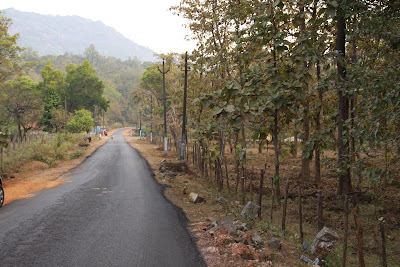
The Cauvery was a familiar, recurring constant of Ramanujan's life. At some places along its length, palm trees, their trunks heavy with fruit, leaned Over the river at rakish angles. At others, leafy trees formed a canopy of green over it, their gnarled, knotted roots snaking along the riverbank. "
The paras mentioned above are the first two paragraphs in the book - The Man Who Knew Infinity: A Life of the Genius Ramanujan* by Robert Kanigel. The book written in 1991, talks about the life of the Indian Mathematician who lived between 1887 and 1920. Needless to say the above writing had me hooked.
A lot of times when I read a book, I end up thinking more about the expertise and artistry of the author than about the book itself. What I was amazed in this book was how the author had got into Ramanujan's shoes and imagined how he felt living on the banks of one of the biggest rivers in South India, Cauvery.The author then goes on to describe the river Cauvery in next few pages. He talks about its origin, character, colour. He talks about its serenity and turbulence and how it deeply touched the lives of the people who lived on its banks.
A lot of times when I read a book, I end up thinking more about the expertise and artistry of the author than about the book itself. What I was amazed in this book was how the author had got into Ramanujan's shoes and imagined how he felt living on the banks of one of the biggest rivers in South India, Cauvery.The author then goes on to describe the river Cauvery in next few pages. He talks about its origin, character, colour. He talks about its serenity and turbulence and how it deeply touched the lives of the people who lived on its banks.
In another place, the author talks about the caste system in India. He mentions how the caste system was started by Manu, the great saint. He talks about how the British writers failed to understand it and how they liked to write horror stories of Indians affected by the caste system. He then goes on to explain how the caste system actually works in India and then talks about Ramanujan lived his life as a "South Indian" Brahmin. The first few chapters in this book gives a detailed description about India, its cultures, festivals, temples etc and how Ramanujan's life revolved around it.
I loved the way the author wrote about the culture in India and connected it to Ramanujan keeping the flow in the narration alive. Also the writing is fluent, imaginative and thoroughly researched and that makes it a thoroughly enjoyable read.
Here is another piece of writing that I liked.
"It would take a few minutes for his eyes to adjust to the shadows. There, in the Sarangapani temple's outer hall, it seemed gloomy after the bright sun outside. What light there was swept in from the side, softly modeling the intricate sculpted shapes, the lions and geometrically cut stone, of the hall's closely spaced columns.
Away further from the light, nestled among the columns, were areas favored by bats for nesting. Sometimes Ramanujan could hear the quick, nervous swatting of their wings. Or even see them hanging from the ceiling, chirping away, then abruptly fluttering into flight.
Unlike Western churches which, architecturally, drew you higher and higher, here the devout were pulled, as it were, inner and inner. Within the high stone walls of the temple complex stood a broad court, open to the sky and, within that, the roofed columned area. In further yet, you came to the great chariot, its enormous wheels, several feet in diameter, drawn by sculpted horses and elephants. Within the building-within-abuilding that was the chariot stood, in a dark stone cell where a lamp burned night and day, the sanctum sanctorum, the primary deity himself-the great god Vishnu, rising up from his slumber beside the many-headed serpent representing Eternity."
------------------------------------------------------------
Srinivasa Ramanujan (22 December 1887 – 26 April 1920) was an Indian mathematician and autodidact who, with almost no formal training in pure mathematics, made extraordinary contributions to mathematical analysis, number theory, infinite series, and continued fractions. Living in India with no access to the larger mathematical community, which was centered in Europe at the time, Ramanujan developed his own mathematical research in isolation. As a result, he sometimes rediscovered known theorems in addition to producing new work. Ramanujan was said to be a natural genius by the English mathematician G.H. Hardy, in the same league as mathematicians like Euler and Gauss.
------------------------------------------------------------
Srinivasa Ramanujan (22 December 1887 – 26 April 1920) was an Indian mathematician and autodidact who, with almost no formal training in pure mathematics, made extraordinary contributions to mathematical analysis, number theory, infinite series, and continued fractions. Living in India with no access to the larger mathematical community, which was centered in Europe at the time, Ramanujan developed his own mathematical research in isolation. As a result, he sometimes rediscovered known theorems in addition to producing new work. Ramanujan was said to be a natural genius by the English mathematician G.H. Hardy, in the same league as mathematicians like Euler and Gauss.


1 comments:
Good one, Veena!
I too admire the writing of author and wonder about the author more than the subject when reading. I wonder why the author used a particular word or phrase and not a synonym. In general though, I get impressed by the simplicity and terseness of a writing rather than embellishments.
Nilu
Post a Comment